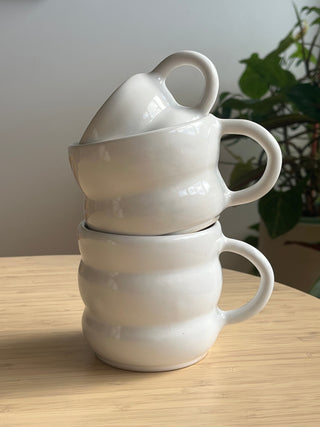
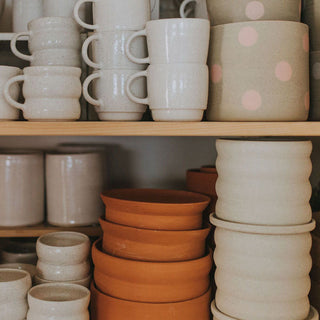
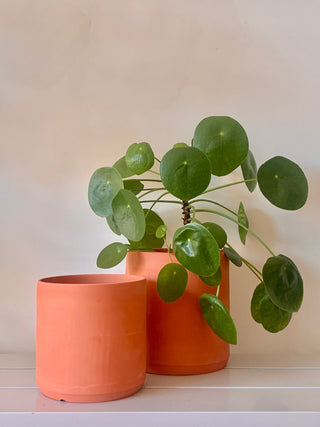


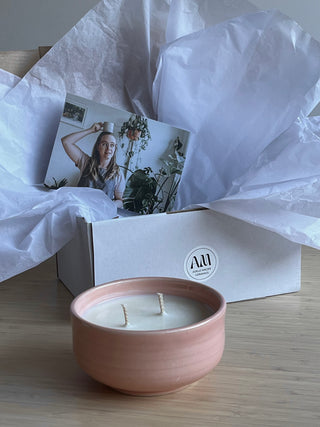
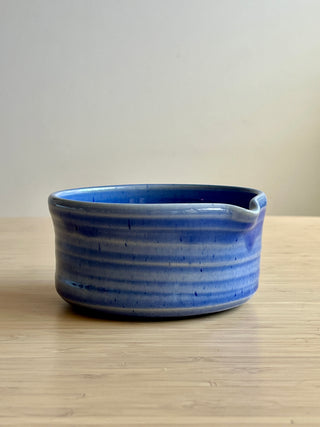



Every year when Black Friday rolls around, a familiar tension resurfaces — the tug-of-war between handmade craft and the fast-paced world of consumer capitalism. If you’re a ceramicist, a small-batch maker, or someone who runs a handmade ceramics studio, you’ll know exactly what I mean.
Craft and capitalism often sit at opposite ends of the spectrum. Craft asks for slowness, attention, and intimacy with materials. Capitalism demands speed, scale, predictability, and constant output. These two worlds rarely meet without friction — and Black Friday is one of the clearest examples of that clash.
The Slowness of Craft vs. The Speed of Sales
Handmade craft has its own rhythm. It requires time, practice, and spaciousness to develop skills and create objects with integrity. Whether it’s hand-throwing a vase, refining a glaze recipe, or trimming a pot at just the right moment, the process simply can’t be rushed.
But big sales events like Black Friday rely on volume, high turnover, and rapidly produced stock — the complete opposite of the handmade world.
This is why handmade pottery and large-scale retail can never align neatly. Craft thrives on intention, not urgency. It’s grounded in process, not pressure.
Craft Can’t Scale Without Losing Something
One of the biggest misconceptions in the handmade world is the idea that makers can “scale up” like traditional businesses. But beyond a certain point, scale starts chipping away at what makes craft… craft.
The integrity of the materials, the attention to detail, the maker’s hand — these things can’t be mass-produced. And that’s the beauty of it.
When we treat handmade ceramic pieces like factory-made products, we end up valuing them the wrong way. And Black Friday amplifies that misunderstanding.
The Problem With Comparing Handmade Ceramics to Mass-Produced Goods
Mass production benefits from automation, bulk materials, streamlined labour, and economies of scale. This is how retailers can offer dramatic price cuts during sales — their system is built for it.
Handmade work is the opposite. Every object starts at zero. Every piece requires labour, skill, materials, tools, kiln firings, and time.
So when consumers compare a handmade ceramic vase to a factory-made vase strictly on price, craft will always lose — not because it’s overpriced, but because they’re incomparable products.
This direct comparison creates real harm:
-
Downward pressure on makers to lower their prices
-
Temptation to cut corners on materials
-
Burnout from trying to “keep up”
-
Undervaluing the years of skill behind handmade pottery
This is why it’s so important to understand the difference between handmade ceramics and mass-produced homewares — especially during the Black Friday season.
Where Your Money Actually Goes When You Support a Maker
There’s also something beautifully simple — and often overlooked — about where your money goes when you choose to buy from a small studio like mine. Yes, it supports clay, tools, glazes, kiln repairs, and all the practical things that keep the wheels literally turning. But it also supports the very normal parts of a maker’s life: school fees, groceries, rent, the occasional coffee with a friend, a new pair of shoes when mine finally give out, and all the everyday expenses we all share. Your purchase doesn’t disappear into a faceless system — it goes straight into a real life, a local community, and the stability of a person doing their best to make meaningful work.
Why You Won’t See Big Discounts in My Studio
If you’ve ever wondered why many makers don’t run Black Friday sales, the answer is simple: we can’t discount our time. We can’t discount our materials, our labour, our kiln firings, or the slow, intentional process that defines handmade pottery.
Craft lives outside the chaos of limited-time offers.
It asks us — makers and customers alike — to slow down, value the process, and choose things made with care, not made for a sale.
Choosing Craft During the Holiday Season
If you choose to support small makers, ceramic studios, or local craftspeople this season, it means more than you know. Every purchase supports:
-
sustainable, low-scale production
-
ethical making practices
-
real people, not systems
-
the continuation of time-honoured craft traditions
And if you’re simply here to learn, appreciate, or follow along, that support matters too.
Craft is intentional. Craft is slow. Craft is human.
And in a world rushing toward the next big sale, maybe that’s exactly why it matters so much.